
 By IndiaHub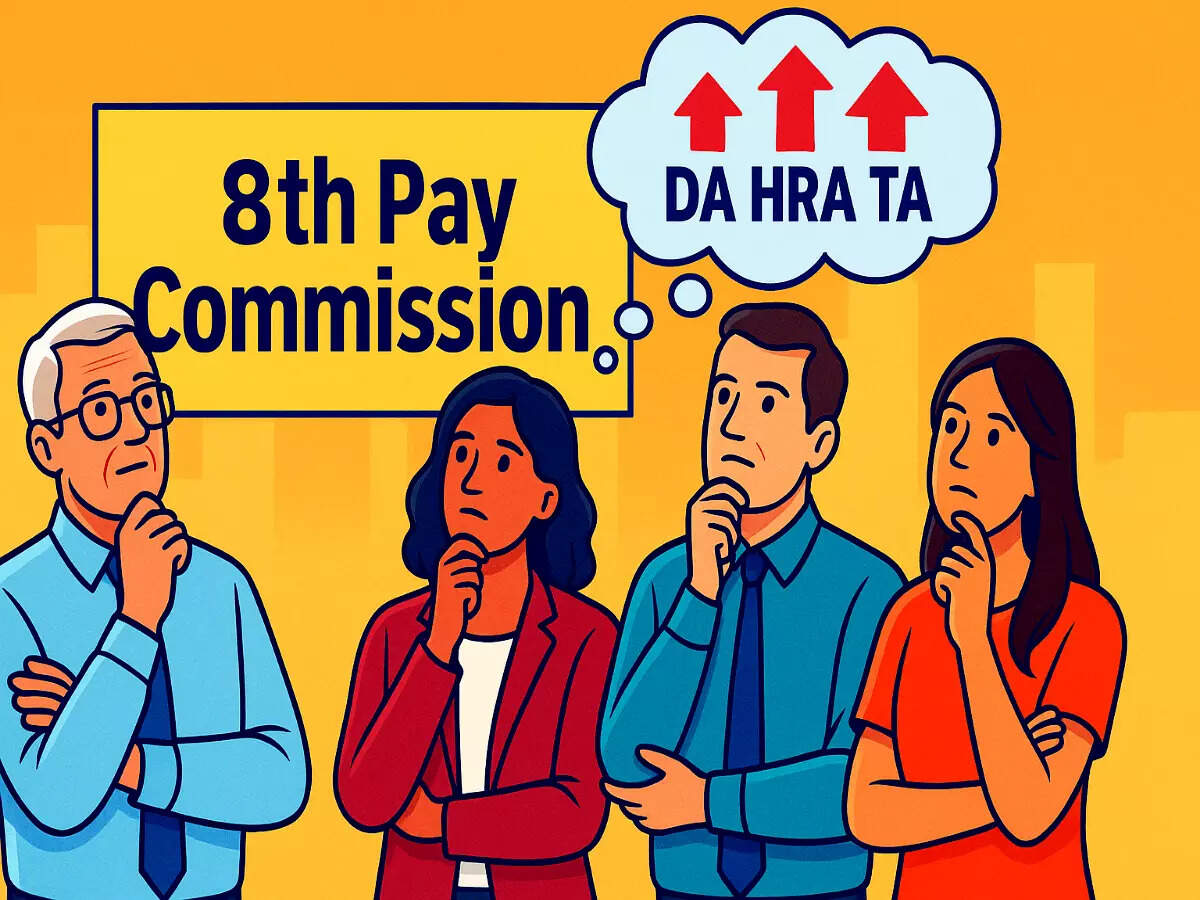
However, in such a scenario, the big question is whether employees’ DA and other key allowances such as house rent allowance (HRA), transport allowance (TA) will keep increasing till 8th CPC recommendations are implemented or whether there will be no hike in these allowances after December 31, 2025?
Ramachandran Krishnamoorthy, Director- Payroll Services, Nexdigm, and Manjeet Singh Patel, National President of the All India NPS Employees Federation, explain various nuances of DA and other emolument hikes for central government employees ahead of the implementation of the recommendations of the 8th CPC.
What will happen to the DA hike until 8th Pay Commission recommendations are implemented?
DA will continue to be calculated in the 7th Pay Commission. Since the 8th Pay Commission’s recommendations are not yet fully implemented, DA hikes will keep being calculated on the current (7th Pay Commission) basic pay, says Krishnamoorthy.
The next question which many people will have in their minds is if the 8th Pay Commission is implemented over an 18-month period, how many DA revisions are likely during that time from the current DA of 58%?
As per Krishnamoorthy, since DA revisions take place twice per year, in 18 months, 3 DA revisions are expected in 6, 12 and 18 months, respectively. If the current DA is 58%, and we assume similar hike amounts (for simplicity)—let’s say 3% per revision (this is just a rough assumption, actual hikes depend on CPI):
After first revision (6 months), DA will be61% of basic salary
After second hike (12 months), DA will be64% of basic salary
After third hike (18 months): DA will be 67% of basic salary
As per Patel, DA will keep increasing every six months as usual. So, if the recommendations of the 8th Pay Commission are implemented in 18 months, there should be three DA hikes till then. After that, DA will be merged with the basic salary of a government employee, which will form the basic pay in the 8th Pay Commission.
Giving an example, Manjeet explained how DA hikes in the next 18 months may help salary hike and impact the fitment factor for the 8th Pay Commission.
A fitment factor is the multiplier for the basic pay and pension in a new pay commission. E.g., if the fitment factor of the 8th CPC is 2.0, the basic pay of an employee in the 7th CPC will be multiplied by 2 to form the new basic pay.
Example of DA hike and its impact on basic salary and fitment factor-
Current DA- 58%
Cumulative expected DA in next 18 months- 7%
Since a central government employee gets an annual increment of 3.5% in their basic salary and there should be 2 annual hikes before the 8th CPC implementation-
Thus, after 2 annual increments in salary, the total hike- 7% (3.5% each as per the 7th CPC pay matrix)
These two factors combined can help an employee’s current basic pay increase by 20%, which will take the current fitment factor of 1.58 to 1.78.
Another factor that is considered to calculate the fitment factor is the family unit.
The current family units that the 7th Pay Commission considered for the basic pay calculation were 3. For the 8th CPC ToR, a family unit of 3.6 has been recommended. We assume that the pay commission will settle at 3.5 family units. If these ares the conditions, there will be a further increase of 20% in the basic salary, and it will take the fitment factor to 1.98.
On top of it, the government gives the inflation growth factor in every pay commission, which is expected to be at least 15% of the basic pay.
With all these hikes, the expected fitment factor for the 8th Pay Commission should be at least 2.13.
If the government increases the family units to more than 3.5 and the inflation growth factor is also higher than 15%, the fitment factor can go higher.
“With 3 DA hikes expected in the next 18 months, a fitment factor of 2.13 is realistic. This is also what we recommend in our meetings with government officials. However, had the government merged DA with the basic pay when it reached 50%, the current basic pay of an employee would have been around 10% higher. But still, 3 DA hikes can take the fitment factor to a reasonable level,” says Patel.
Apart from DA, which other allowances are expected to increase before the 8th Pay Commission implementation?
Other than DA, house rent allowance (HRA), Children Education Allowance (CEA), and medical/fixed medical allowance (FMA) (especially for pensioners) will keep increasing, says Krishnamoorthy.
House Rent Allowance (HRA)
As per Krishnamoorthy, HRA is very likely to be revised upward because it’s linked with both basic pay and DA.
According to projections, HRA rates may go up for different city classes (X, Y, Z).
Transport Allowance (TA)
This is another allowance that could see a bump. Some 8th CPC projections suggest TA could increase from the current quantum, says Krishnamoorthy.
However, some experts think the 8th CPC might rationalise or even cut certain small/regional allowances, the 8th CPC could be conservative on some travel/special duty allowances.
Children Education Allowance (CEA)
According to some sources, CEA may increase. For example, some projections show a hike in CEA when DA reaches 50%, says Krishnamoorthy.
Education-related allowances (including children with disabilities or hostel subsidy) are often tied to inflation or DA, making them eligible for revision.
Medical/Fixed Medical Allowance (FMA)
Medical allowances (especially for pensioners) are likely to be reviewed.
Under the 7th CPC, fixed medical allowances for pensioners were raised, so there is a precedent for such increases, as per Krishnamoorthy.
Dress allowance, risk allowance, and other allowances
Projections suggest potential increases in dress allowance and risk allowance as well.
Some performance-linked or skill-based pay elements may also come in or be enhanced under the 8th CPC.
Will annual increments for government employees continue before the 8th Pay Commission takes effect?
Krishnamoorthy explains that reports suggest that 8th CPC implementation may be delayed and could stretch into 2027.
Because of this delay, it’s likely that current pay scale mechanisms (including annual increments) will continue in the interim, at least under the existing (7th CPC) structure.
For employees who don’t get promoted within 10 years, will financial upgradation under Modified Assured Career Progression Scheme (MACPS) be granted during the interim period?
The rule refers to where the central government MACPS, a policy for its employees that provides financial and grade pay upgrades after certain periods of service, specifically 10, 20, and 30 years.
Three financial upgradations
According to Department of Personnel and Training (DoPT) / MACPS guidelines, there are three financial upgradations under MACPS: after 10, 20, and 30 years (or after 10 years of continuous service in the same pay level), whichever is earlier, Krishnamoorthy explains
This is a well-established rule under the 7th Pay Commission.
No change in designation
MACP upgradation is purely financial, it does not change the job title or seniority, says Krishnamoorthy.
When upgraded, the employee moves to the next higher level in the pay matrix.
Eligibility conditions
Krishnamoorthy explains that a performance benchmark (“Very Good”) is typically required for MACP upgradation.
If upgradation is deferred (for example, because of being declared “unfit” or due to disciplinary action), then the delay in the first upgradation will push back the subsequent ones by the same amount.
Also, if someone refuses a promotion before they become eligible for an MACP upgrade, they might be disqualified from that upgradation.
Applicability
Krishnamoorthy says that MACPS is applicable up to a certain pay level (in many rules, up to “Level 15” in the 7th Pay Commission matrix).
It applies to regularly appointed central government civilian employees.