
 By IndiaHub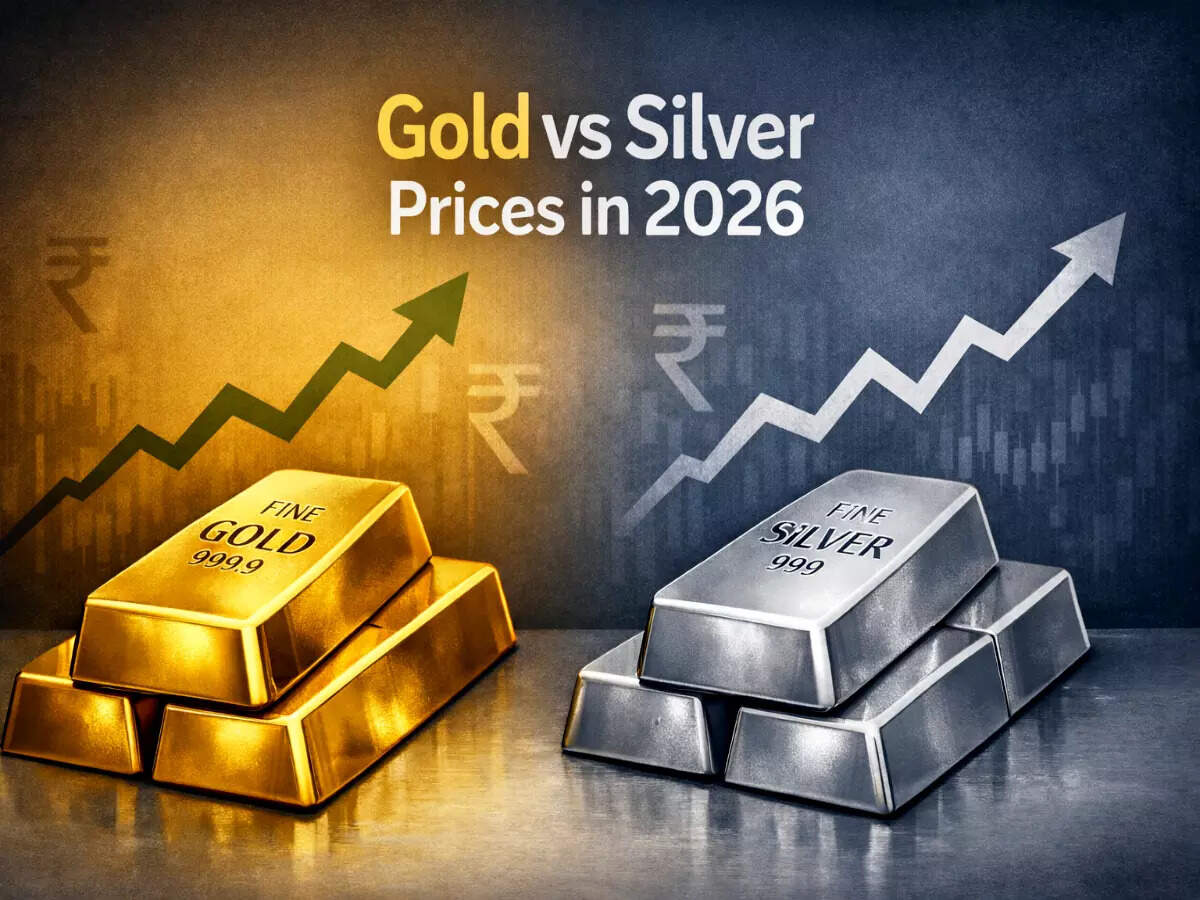
While gold’s price on the Multi Commodity Exchange of India Limited (MCX) jumped by nearly 78% in a year – from Rs 75,233 on December 20, 2024, to Rs 1,33,589 on December 22, 2025, silver has given a whopping 144% return in the same duration, rising from Rs 85,146 to Rs 2,08,062. In the same period, the benchmark share market index, Nifty 50, has risen by just 10.18%, prompting many investors to shift and invest in yellow and white metals.
Central banks accumulating gold and silver’s increasing demand in industrial use have been the key factors behind their record price rise. Another important factor that led to the price rise is uncertainty over the global economy due to US tariff hikes.
Will global economies recover from the impact of tariffs in 2026 or will we see another year of uncertainty? ?Which metal can be a better investment choice in the new year – silver or gold? Let’s see what experts say.
With silver and gold prices rising at record highs, how can they perform in 2026?
“Both metals (silver and gold) are entering 2026 with strong fundamentals, though returns may normalise in the new year,” says Naveen Mathur, Director – Commodities, currencies & international business, Anand Rathi Share & Stock Brokers.
Mathur says that gold should continue to perform steadily, supported by expectations of lower global interest rates, geopolitical uncertainty, central bank buying, and a softer US dollar, along with continued ETF inflows.
Mathur believes silver, despite having higher volatility, may continue to outperform gold in percentage terms due to its dual role as both a precious and industrial metal.
Both silver and gold are expected to remain in the positive region until the end of 2026, even with fluctuations as the prices reflect strong demand, says Aksha Kamboj, Vice President, India Bullion & Jewellers Association (IBJA) and Executive Chairperson, Aspect Global Ventures.
What can be the price rise range for silver and gold in the year 2026?
Over the next year, gold could target $5,000–5,500 (~Rs 150K and 165K), supported by rate cuts, central bank buying, and fiscal concerns, predicts Prithviraj Kothari, managing director at RiddiSiddhi Bullions Ltd, President of India Bullion and Jewellers Association Ltd.
“Silver may outperform on a percentage basis, with targets of $75–80 (~Rs 230k and 250K), aided by industrial demand and tight supply,” says Kotrahi while giving the range of silver price rise.
Suvankar Sen, CEO of Senco Gold and Diamonds, while predicting that the price rise will continue for gold and silver in the new year, provides a conservative estimate compared to Kothari.
“Market estimates suggest gold could trade between $4,300–$4,800 per ounce, and silver between $55–$75 per ounce by the end of 2026,” says Sen.
Siddharth Jain, Vice President – Valuations, SPA Capital Services Limited, says being a high-beta asset, silver moves faster than gold once a bull cycle is established. Giving his ranges for gold and silver prices in the new year, Jain says that gold prices can jump to $4,800–$5,000/oz, while silver prices can soar to $85–$100/oz.
Mathur feels that between gold and silver prices, silver has the potential to rise higher, ‘specially in the first half of 2026’.
Giving a much higher price ranges for two metals, Mathur says: “By the end of 2026, gold prices could move toward $4,900–5,200 per oz, while silver has the potential to test $80–85 per ounce, provided macro conditions remain supportive.”
Which metal should investors invest in and how – lump sum or SIP?
When it comes to investing, gold is most suited as a long-term stabiliser of the portfolio, opines Kamboj, adding that one should invest through SIP in gold so that the average cost works in favour of the investor.
Kamboj suggests investing in silver on a smaller scale, spread out over time and not in lump sum unless it fits the investment strategy based on market opportunities.
Sen says while the yellow metal is suitable for core holdings due to stability, silver offers higher upside potential.
Sen believes that investors may consider staggered SIP purchases to manage price volatility, while tactical lump sum investments can capture favourable market points.
Jain strongly recommends investing through SIP in silver as industrial demand creates a ‘structural imbalance’ that leads to explosive but rapid price spikes.
“SIP allows investors to benefit from this volatility without trying to time the blow-off top,” opines Jain.
What does the current gold–silver ratio indicate?
The gold-silver ratio is an important factor to measure the relative strength of silver and gold. The ratio is calculated by dividing the gold price by the silver price. The gold-silver ratio has fallen from 87 at the beginning of the year to 64.70 at present because of a sharper rise in silver prices.
Given that the gold-silver ratio has fallen by over 34% in just 1 year, which metal prices can rise higher – silver or gold?
Jain says historically, the gold-silver ratio has reached as low as 15:1 during major resets. He sees the fall from 87 to 65 as the beginning of ratio compression. “When the ratio collapses quickly, it often signals banking sector stress or a liquidity crisis where “hard assets” become the only trusted collateral.”
Kamboj feels that a declining gold-silver ratio indicates that silver will outperform gold, closing the price difference.
“A declining ratio typically reflects stronger relative momentum in silver. At current levels, the ratio suggests silver is closer to fair value versus gold, and some consolidation in silver or relative catch-up in gold cannot be ruled out,” Kamboj opines.
Sen echoes Kamboj’s thoughts, saying the current gold-silver ratio is suggesting potential for continued relative gains in silver, while gold prices are likely to appreciate moderately.
He further recommends buying gold for stability and silver for targeted exposure.
Kothari feels that despite a declining gold-silver ratio, gold can still rise in its price alongside silver if macro uncertainty, rate cuts, and central bank demand persist.