
 By IndiaHub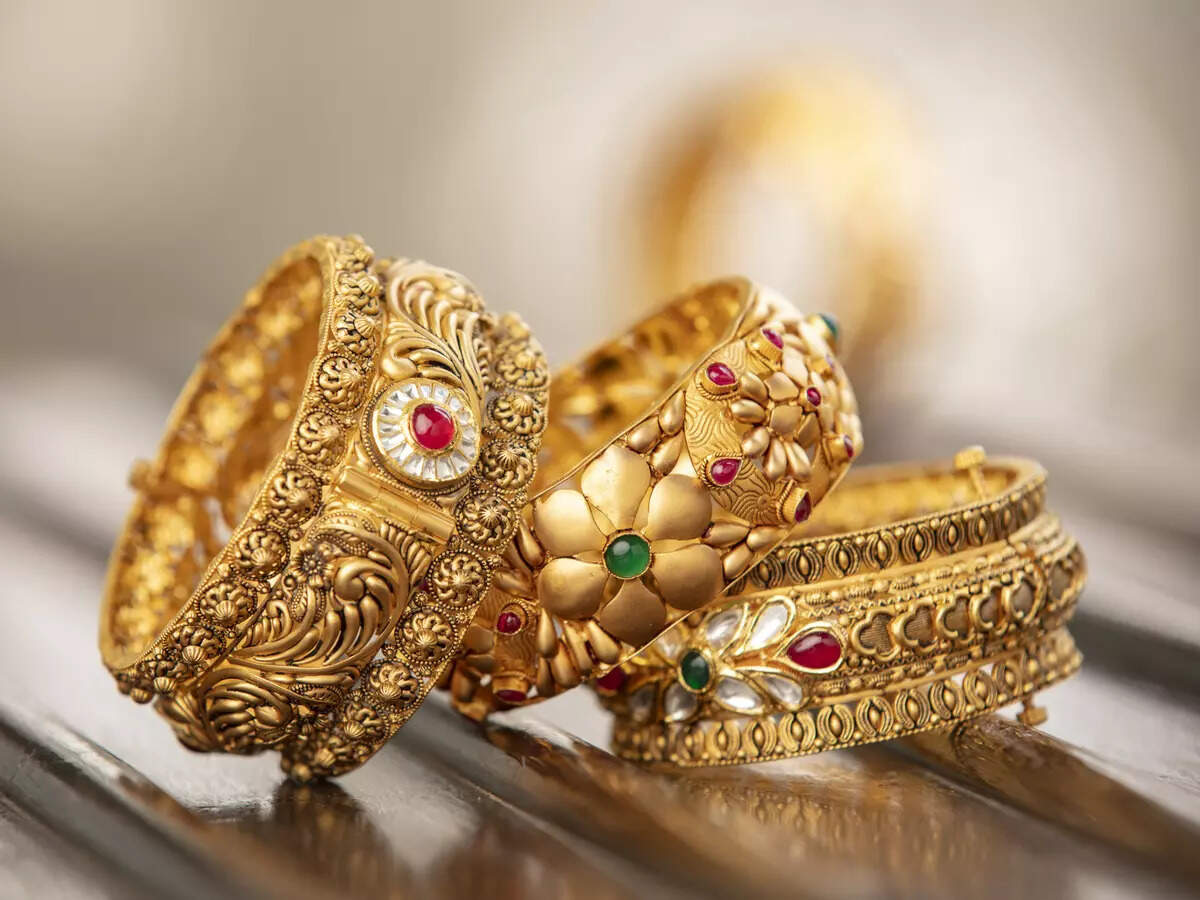
Sampat exchanges his jewellery every few years to stay aligned with changing trends. But the utility isn’t just aesthetic. “Gold also serves longterm investment goals, such as saving for a daughter’s marriage. Instead of letting it lie idle, we make it work towards both lifestyle and financial objectives,” Sampat adds.
As of June 2025, India’s household gold stock crossed 34,600 tonnes, valued at approximately $3.8 trillion, according to a Morgan Stanley note in October 2025.
To put its scale into perspective, this is equivalent to nearly 88.8% of the country’s GDP, reflecting how deeply gold is embedded in the nation’s financial and cultural fabric.
With such vast wealth lying idle in lockers, investors today have multiple avenues to put their physical gold to productive use, ranging from jewellery upgrades and gold loans to electronic gold receipts, monetisation schemes, and conversion into gold-backed investment products.
Gold Monetisation Scheme
The government introduced the Gold Monetisation Scheme (GMS) in 2015, an initiative aimed at transforming physical gold into a productive financial instrument. Under the scheme, individuals and institutions can deposit their gold with designated banks and earn interest, without worrying about storage or purity management.
The key appeal of GMS lies in its ability to convert physical gold into a gold-equivalent deposit that earns annual interest, typically between 2.25% and 2.5% per annum for short-term deposits.
The process is relatively straightforward: jewellery, coins, or bars (excluding those with gemstones) are taken to an authorised collection and purity testing centre where their purity is verified. The minimum quantity that can be deposited is typically 10 grams, with no upper limit.
Once gold is deposited and melted, depositors lose physical possession, but they retain ownership through the deposit certificate issued by banks. On maturity, investors can redeem their gold or opt for cash equivalent to the principal plus accrued interest.
Short-term deposits under GMS come with tenures between one and three years. From March 2025, however, only the short-term option remains available, as the government has discontinued the medium- and long-term deposit categories. While this move streamlines the scheme, it also limits its appeal for long-term investors seeking higher compounding benefits.
Despite its clear economic value, participation in the scheme has been limited, says Shweta Rajani, Head – Mutual Funds, Anand Rathi Wealth. A major reason is the sentimental value attached to gold, particularly jewellery handed down through generations.
According to Rajani, “the Gold Monetisation Scheme is ideal for those holding idle or broken gold that they don’t intend to use. It allows investors to earn risk-free returns while contributing to the broader economy, but it may not suit those emotionally attached to their jewellery, as the original form cannot be retrieved.”
Gold loans
Unlike selling gold, which results in a permanent loss of the asset, gold loans allow borrowers to retain ownership while unlocking liquidity. As Mukesh Pandey, Director of Rupyaa Paisa, explains, the demand for gold loans in 2025 has surged due to “easy availability, minimal documentation, and rapid disbursal.”
Gold loans work on a simple mechanism: individuals pledge their gold ornaments to a bank or non-banking financial institution (NBFC) and receive a loan amount equivalent to a percentage of the gold’s market value. This is governed by the Reserve Bank of India (RBI), which has capped the loan-tovalue (LTV) ratio at 85%.(The LTV ratio is 75% for loans above Rs.5 lakh). That means for gold worth Rs.1 lakh, borrowers can avail up to Rs.85,000 as a loan. The pledged gold is securely stored by the lender and returned once the borrower repays the principal along with interest. Unlike personal loans, gold loans do not require a strong credit history or income proof, making them highly accessible.
The valuation of gold is based on purity and prevailing market rates, determined through electronic testing methods. While hallmarking is not mandatory, hallmarked jewellery ensures quicker processing. Most lenders accept 18 to 24 karat jewellery, but exclude items embedded with stones or metals. Interest rates are significantly lower than those on unsecured credit such as personal loans or credit cards, typically ranging between 9% and 15% per annum, depending on the lender and borrower profile.
The major fees they include are processing fees (0.5%-2% of loan amount), valuation charges, documentation fees, penalty interest on any delayed payments (2%-3% per month). Some lenders may also include renewal fees/foreclosure depending on the repayment deals given.
Borrowers also enjoy flexible repayment options. They can choose regular EMI plans, bullet payments (where interest is paid periodically and principal at the end), or overdraft facilities where interest is charged only on the amount utilised. Failure to repay on time can result in the pledged gold being auctioned, though lenders generally provide a grace period of 30-60 days and multiple reminders before initiating the auction process.
Only RBI-registered institutions should be approached to ensure transparency, accurate valuation, and safe storage.
This avenue allows individuals to earn a steady return on their idle jewellery without having to sell it. Unlike traditional gold loans where you pay interest to borrow against your jewellery, gold leasing lets you lend your gold to jewellers who use it as working capital and pay you a yield in return. It effectively transforms gold from a passive household asset into an incomegenerating financial instrument.
Investors can take unused or broken jewellery, or old coins, to a partner jeweller of leasing platforms such as SafeGold. After consent, the gold is melted to determine exact purity and converted into 24 karat form. A digital gold account is then created in the investor’s name, reflecting the gram weight of pure gold they own. The investor can then choose to lease this gold to jewellers listed on the platform, each offering different annual yields, typically between 2% and 5%. Returns are paid not in rupees, but in grams of gold, allowing investors to accumulate more gold over time.
Explaining this, Gaurav Mathur, Founder and Managing Director of SafeGold, says, “If you start the year with 100 grams of gold, you’ll end up with 105 grams depending on the yield that you earn.” This model allows investors to benefit from both rising gold prices and compounding returns in gold terms.
Five ways to make your idle gold work for you
Gold Monetisation Scheme
What it is
- Government-backed scheme to deposit gold in banks and earn interest (2.25–2.5%).
How it works
- Deposit jewellery/coins at authorised bank
- Gold is assayed, melted
- Interest paid annually, redeemable in gold or cash
Keep in mind
- Only short-term (1–3 year) options exist
- Low liquidity compared to gold ETFs or loans
- Minimum deposit is 10 grams; no upper limit
Gold leasing
What it is
- You may lease your gold to jewellers via leasing platforms to earn returns (2-5% annually), paid in grams of gold.
How it works
- Take unused jewellery, coins to a jeweller
- Purity is tested (requires melting)
- Choose a jeweller to lease to; returns vary by risk
Keep in mind
- Jewellery cannot be returned in original form
- Yield depends on the jeweller’s credit quality
- Delivery charges apply if you later want physical gold back
Gold loans
What it is
Pledge gold to borrow money instead of selling it—pay interest but retain ownership.
How it works
- Submit jewellery to bank/NBFC
- Receive loan up to 85% of gold’s value
- Gold returned once loan is repaid
Keep in mind
- Default can lead to auction of jewellery
- Interest rates vary (9–15%) plus processing fees
- Ideal for short-term liquidity needs
Jewellery upgrading
What it is
- Redesign or exchange old jewellery to create modern, wearable pieces without repurchasing gold.
How it works
- Gold purity and weight are assessed
- Designs are shown for approval
- Old jewellery melted and reused
Keep in mind
- Making charges apply on new design
- Gold loss during refining can be 1–2%
- Emotional attachment must be weighed
Converting to gold funds
What it is
- Sell physical gold and reinvest in paper gold to gain digital ownership with transparency and tax benefits.
How it works
- Physical gold is sold
- Proceeds invested in ETFs
- Returns mirror gold prices, units held digitally
Keep in mind
- Capital gains tax may apply on sale
- No direct conversion mechanism
- Expense ratios apply, but no making or storage charges
The investor ownership is protected through trustee and custodian safeguards. At maturity the gold quantity originally leased, along with accumulated yield, is credited back to the investor’s digital account. From there, investors can choose to sell it, take physical delivery, or re-lease it.
Convert into funds
Converting physical gold into financial gold products such as Gold ETFs and mutual funds can be a strategic choice for investors seeking security, transparency, and liquidity. However, the decision comes with both compelling benefits and certain trade-offs that must be carefully considered.
On the upside, financial gold eliminates concerns around safety, quality and storage. Vivek Banka, Founder of GoalTeller, points out that “investors holding large quantities of gold and facing storage risks would be better off converting their holdings into ETFs or gold funds that ensure almost no security risk, better taxation and no making or markup costs.” In gold ETFs, the price is almost entirely determined by the real-time market value of gold, as they are benchmarked to live market rates, and come with efficient taxation: long-term capital gains are taxed at 12.5% after just 12 months of holding, compared to physical gold where holding costs and resale deductions reduce net gains.
Liquidity is another major advantage. As Yash Sedani, Assistant Vice President, Investment Strategy at 1 Finance explains, gold ETFs and funds can be sold instantly via a mobile app or trading account with T+1 settlement, whereas physical gold requires purity checks, negotiation, and often attracts a 2-5% discount on resale. ETFs also provide complete price transparency, eliminating regional price variation or hidden charges.
However, there are limitations. There is currently no direct mechanism to convert physical gold into ETFs; the investor must first sell the gold, pay applicable capital gains tax, and then reinvest the proceeds. Sedani cautions that “conversion typically attracts capital gains tax if the gold is sold at a profit.” Additionally, ETFs come with expense ratios, while gold mutual funds may slightly underperform due to higher fees. Both ETFs and funds can underperform physical gold.
In essence, converting physical gold into ETFs is ideal for investors prioritising liquidity, security, and tax efficiency over emotional attachment. As Banka summarises, this trend is set to accelerate due to “safety, costs, taxes, and convenience”, but investors must account for exit taxation and be prepared to view gold through a financial, not sentimental, lens.
Upgrading jewellery
Upgrading old jewellery is increasingly becoming a smart financial and aesthetic strategy for households looking to make better use of idle gold. As Ankur Daga, Founder and CEO of Angara, puts it, “Think of old jewellery as sleeping capital, upgrading lets you use that capital, you don’t pay again for the same gold weight, you only top up for new design and craftsmanship.” With making charges on new jewellery often adding 15-25% to the final cost, redesigning allows individuals to retain the full metal value while dramatically reducing expenses.
During festive seasons, many jewellers offer zero-deduction or low-wastage exchange schemes, helping customers retain nearly the full value of their gold. However, upgrading is not without drawbacks. Melting and refining losses can range between 1-2%, and overall gold loss after crafting may reach 5-10%. Original making charges paid on the old jewellery are not recovered, as they represent past labour costs. Additionally, customers must be comfortable with their jewellery being melted, it cannot be retrieved in the original form once the process begins. The redesign cost, though lower than buying new, can still be significant depending on complexity and use of gemstones. Today, households are finding smarter ways to put idle gold to use. However, choices depend on individual needs, whether emotional, financial, or aesthetic, making gold monetisation as much a strategic decision as a cultural shift.