
 By IndiaHub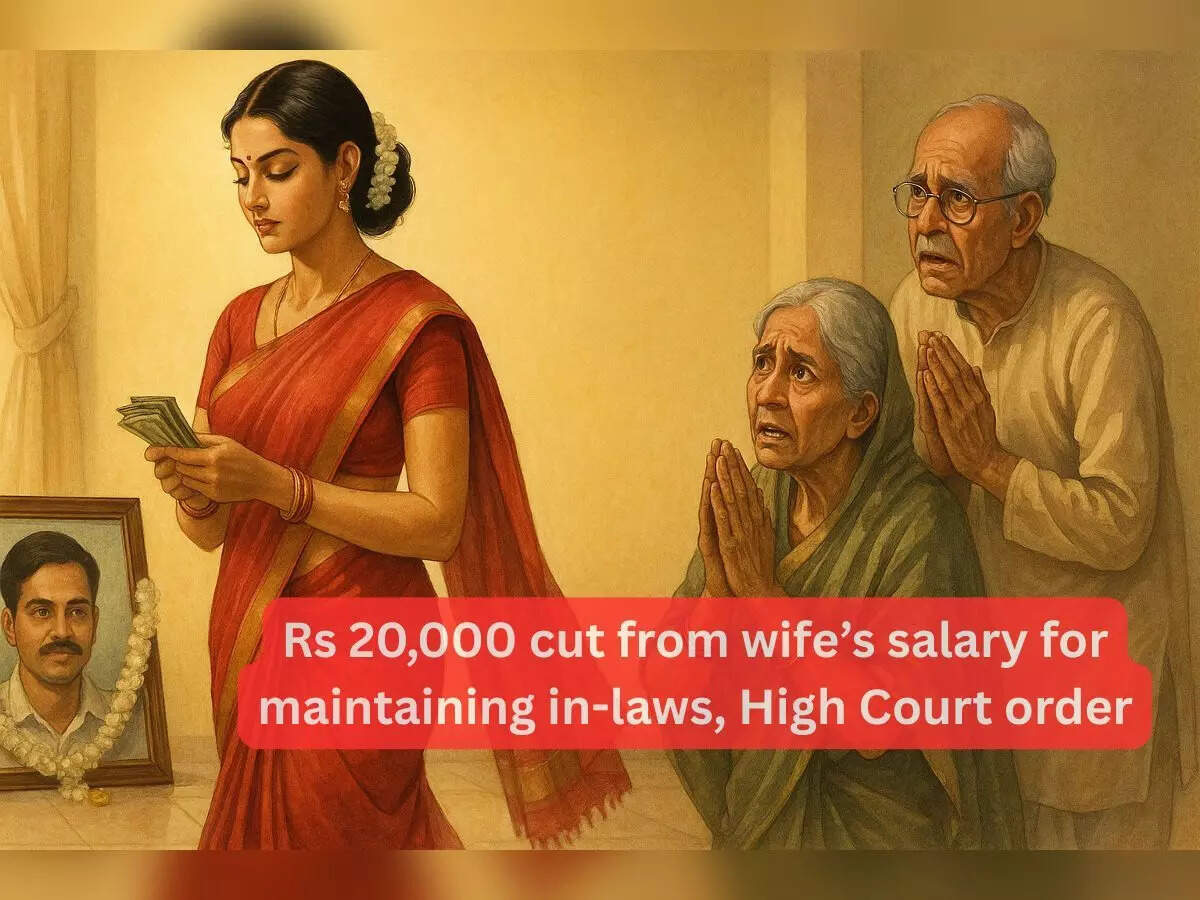
The wife said she initially supported them but later faced harassment, which forced her to leave the matrimonial home and eventually remarry, thus freeing her from any legal obligation to support her former in-laws.
The Rajasthan High Court said: “…While this Court refrains from delving into the personal choices of respondent No.4 (wife), it cannot countenance her breach of the solemn assurance to maintain her in-laws, nor can it permit her to enjoy the fruits of compassionate employment while neglecting those whose welfare formed the basis of such employment.”
What happened here?
To summarize the facts leading to this judgement, the petitioner (Mr. Bhagwan, the father-in-law) had a son, late Rajesh Kumar, who worked as a Technical Assistant for Ajmer Vidhut Vitran Nigam Limited. The Rajasthan High Court said that the records clearly show that the petitioner’s son, Late Rajesh Kumar, died while still in service on September 15, 2015.
The petitioner (Mr. Bhagwan), being the elderly father of the deceased employee, received communications from the relevant authority on September 21 and 26, 2015, instructing him to apply for appointment on compassionate grounds under the 1996 Rules. However, before this process could be completed, respondent No.4, Smt. Shashi Kumari, widow of Late Rajesh Kumar, approached the department claiming compassionate appointmentfor herself as the dependent of the deceased.
Also read: Landlord wins eviction case against tenant who stopped paying rent since 2014 and sub-let property in 2021: Himachal Pradesh High Court order
It’s pretty clear from the records that the petitioner (Mr. Bhagwan, the father-in-law) was offered a job on compassionate grounds in recognition of the services of the deceased employee (his son). But showing a big heart and maybe for reasons only he knows, Mr. Bhagwan, decided to recommend that the said compassionate appointment should go to his daughter-in-law instead of hi,.
The Rajasthan High Court said that the material brought on record clearly indicates that the petitioner (Mr. Bhagwan, father-in-law) and his wife were both financially dependent on their late son and were left destitute after his untimely death.
The Rajasthan High Court said that the contemporaneous report submitted by the Chairman, Municipal Board, Kherli Khatumar, Alwar also confirms that the petitioner (Mr. Bhagwan) had no independent source of livelihood and was living in acute financial distress.
The Rajasthan High Court also said that the report further establishes that within just 18 days of her husband’s death, respondent No.4 (the late son’s wife) left her matrimonial home and started residing with her parents, thereby cutting all ties with the petitioner and his wife.
Also read: Buyer of bank auctioned property discovers massive unpaid bills, files case against bank but gets no relief in HC; lessons for buyers
Despite all this, the Superintendent Engineer, AVVNL, by an order dated March 15, 2016, appointed her *the late son’s wife) as a Lower Division Clerk on compassionate grounds, putting her on probation.
Wife signed an affidavit promising to take care of her late husbands’ parents
The Rajasthan High Court said that the key aspect in this case is the affidavit from October 19, 2015, submitted by respondent No.4 (the late son’s wife) when she was applying for the appointment on compassionate grounds. In this affidavit, she made a serious commitment to live reside with and take care of her deceased husband’s parents; additionally, she agreed to take full responsibility for their welfare; and thirdly, and finally, she promised not to remarry.
Rajasthan High Court said: “While this Court consciously refrains from commenting upon her personal liberty with respect to remarriage, yet the solemn assurance given regarding maintenance of her in-laws was a material and foundational condition upon which the grant of compassionate appointment was premised.”
Also read: Wife hid her Rs 1 lakh monthly salary; Madras High Court cuts her maintenance payment from Rs 15,000 to Rs 10,000
Rajasthan High Court analyses the compassionate employment rules
Rajasthan High Court in its judgement [2025:RJ-JD:45818] dated October 10, 2025 said that upon hearing learned counsel for the petitioner (Mr. Bhagwan, father-in-law) and upon perusal of the entire material placed on record, the Court finds that the present case is a poignant example of how the very benevolent object underlying the Rajasthan Compassionate Appointment of Dependents of Deceased Government Servants Rules, 1996 has been rendered nugatory by the subsequent conduct of the beneficiary (wife).
Also read: After 14-year legal battle, wife gets Rs 1 crore permanent alimony as Supreme Court grants divorce and closes all cases against husband
Rajasthan High Court said that it is settled law that compassionate appointment is not a vested right but an act of grace, intended to alleviate the financial hardship of the family of the deceased government servant. It is a welfare measure, not a mode of employment.
The Rajasthan High Court said that the appointment granted to respondent No.4 (wife), therefore, carried an implicit fiduciary obligation that the emoluments and benefits flowing from such appointment would be used to sustain the family unit of the deceased employee (her husband).
Rajasthan High Court said: “The respondent No.4 (wife), having derived such employment on the strength of her solemn affidavit, cannot now resile (abandon a position or course of action) from the promise that formed the very substratum of the benefit conferred upon her. To allow her to do so would amount to permitting a fraud upon the compassionate scheme itself.”
Rajasthan High Court finds wife took 70% of late husband’s provident fund and compensation amount
The Rajasthan High Court said that from the record, it further emerges that after obtaining compassionate appointment and receiving nearly 70% of the provident fund and compensation amount, respondent No.4 (wife) has abandoned her in-laws and is living elsewhere, reportedly after marrying somebody else.
Also read: Mutation entry can’t override real ownership or inheritance rights, says Supreme Court
Rajasthan High Court said: “Such conduct, in the considered view of this Court, is wholly antithetical to equity, conscience, and the solemn undertaking voluntarily made by her. The parents of the deceased, being in the twilight of their lives, are left to struggle without any financial support or compassion from the very person who was expected to be their caretaker under the scheme of 1996.”
The Rajasthan High Court said: “This Court cannot be oblivious to the moral dimension that underlies the concept of compassionate appointment. The expression “dependent” under the Rules of 1996 is not a mere statutory label but embodies a moral and social responsibility towards the surviving family members of the deceased employee.”
Also read: Wife wins case against tax department after getting Rs 1.85 crore compensation from builder for construction delay; ITAT Mumbai rules in her favour
Rajasthan High Court said that when respondent No.4 (wife) chose to accept the appointment in substitution of the petitioner, who was the original nominee, she stepped into a position of trust.
Rajasthan High Court: “The principle of promissory estoppel (a legal doctrine that enforces a promise, even without a formal contract) squarely applies; having availed herself of the benefit upon a specific assurance, she cannot now disown the corresponding obligation.”
Rajasthan High Court said that they do not hesitate to observe that respondent No. 4 (the late son’s wife) was not extended the benefit of compassionate appointment on account of her personal merit, qualification, competence, or any demonstrable eligibility.
Also read: Tenant sublets house to a family of seven; Legal heirs of landlord file for eviction but face challenge to their ownership, finally win in Delhi HC
Rajasthan High Court says that the term“family” cannot be interpreted in a narrow or compartmentalized manner so as to mean the widow alone
The court said that her engagement did not arise from a regular process of public recruitment; no advertisement was issued, no competitive selection was undertaken, and she did not undergo any written examination or interview as is ordinarily prescribed for appointments in public service. The appointment so conferred was, in substance, an act of grace—a compassionate indulgence of the State, flowing from its parens patriae responsibility to protect and support the dependents of its deceased employees.
Rajasthan High Court said: “The scheme of compassionate appointment is not intended to serve as an avenue for employment based on merit or achievement. Rather, it is a social welfare measure designed to mitigate the immediate hardship faced by the family of a government servant who dies in harness. Its singular purpose is to avert a situation of destitution and starvation, to provide immediate financial relief, and to ensure that the bereaved family is not left without means of subsistence.”
Also read: Fired employee returns company laptop only after criminal case filed; Delhi High Court rules against her for withholding office property
Rajasthan High Court said that in this benevolent framework, the expression “family” cannot be interpreted in a narrow or compartmentalized manner so as to mean the widow alone. It necessarily includes all those who were dependent upon the deceased employee at the time of his death, namely, the parents, spouse, and children; for they together constitute a composite family unit bound by mutual dependency and shared vulnerability.
Rajasthan High Court said that consequently, when one member of such a family is extended the benefit of compassionate appointment, the appointment is not conferred in an individual capacity but as a representative of the entire family.
It therefore carries with it a corresponding moral and legal obligation to safeguard the interests of the other surviving dependents and to ensure their maintenance and well-being.
Rajasthan High Court said: “This principle is not merely ethical but finds implicit recognition in the Rajasthan Compassionate Appointment of Dependents of Deceased Government Servants Rules, 1996, which were framed precisely to uphold this humanitarian objective.”
Also read: Wife ridiculed him in public, called him an alcoholic; court grants husband divorce on grounds of mental cruelty
Rajasthan High Court says when wife accepted late husband’s job on compassionate grounds, she can’t abandon his elderly dependent parents
Rajasthan High Court said: “Thus, the employment granted to respondent No. 4 (wife) cannot be viewed as a personal entitlement earned through merit or competitive process; it is, rather, a consequence of an unfortunate eventuality, intended to protect the deceased employee’s family from deprivation. Having accepted the appointment under such a scheme, respondent No. 4 (wife) cannot be permitted to evade or repudiate her attendant responsibilities towards the other dependents of the deceased, for to do so would defeat both the letter and spirit of the compassionate appointment policy.”
The Rajasthan High Court said that the authorities also failed to appreciate that the initial offer of compassionate appointment was extended in favour of the petitioner (Mr. Bhagwan, father-in-law) himself, and only upon consideration of family welfare was the same channelled in the name of respondent No.4 (wife). The petitioner, an aged man with no independent source of income and suffering from age-related ailments, has been left in a pitiable state.
Rajasthan High Court said: “Such a situation, if permitted to continue, would make a mockery of the very ethos of compassionate employment and erode public confidence in the fairness of administrative benevolence.”
Rajasthan High Court judgement
Rajasthan High Court said that therefore, while they refrain from delving into the personal choices of respondent No.4 (wife), they cannot countenance her breach of the solemn assurance to maintain her in-laws, nor can they permit her to enjoy the fruits of compassionate employment while neglecting those whose welfare formed the basis of such employment.
Judgement:
- In the totality of the facts, keeping in view the petitioner’s age, his medical condition, his proven dependency upon his deceased son, and the moral as well as equitable obligation of respondent No.4 flowing from her own affidavit (Annexure–7), this Court deems it just and proper to direct that from 01.11.2025 onwards, the respondent-department shall ensure deduction of Rs 20,000 (Rupees Twenty Thousand only) per month from the salary of respondent No.4 (wife), to be credited directly into the bank account of the petitioner (father-in-law) towards his maintenance, which shall continue till his lifetime or until further orders of the competent authority.
- With these observations and directions, the writ petition stands disposed of.