
 By IndiaHub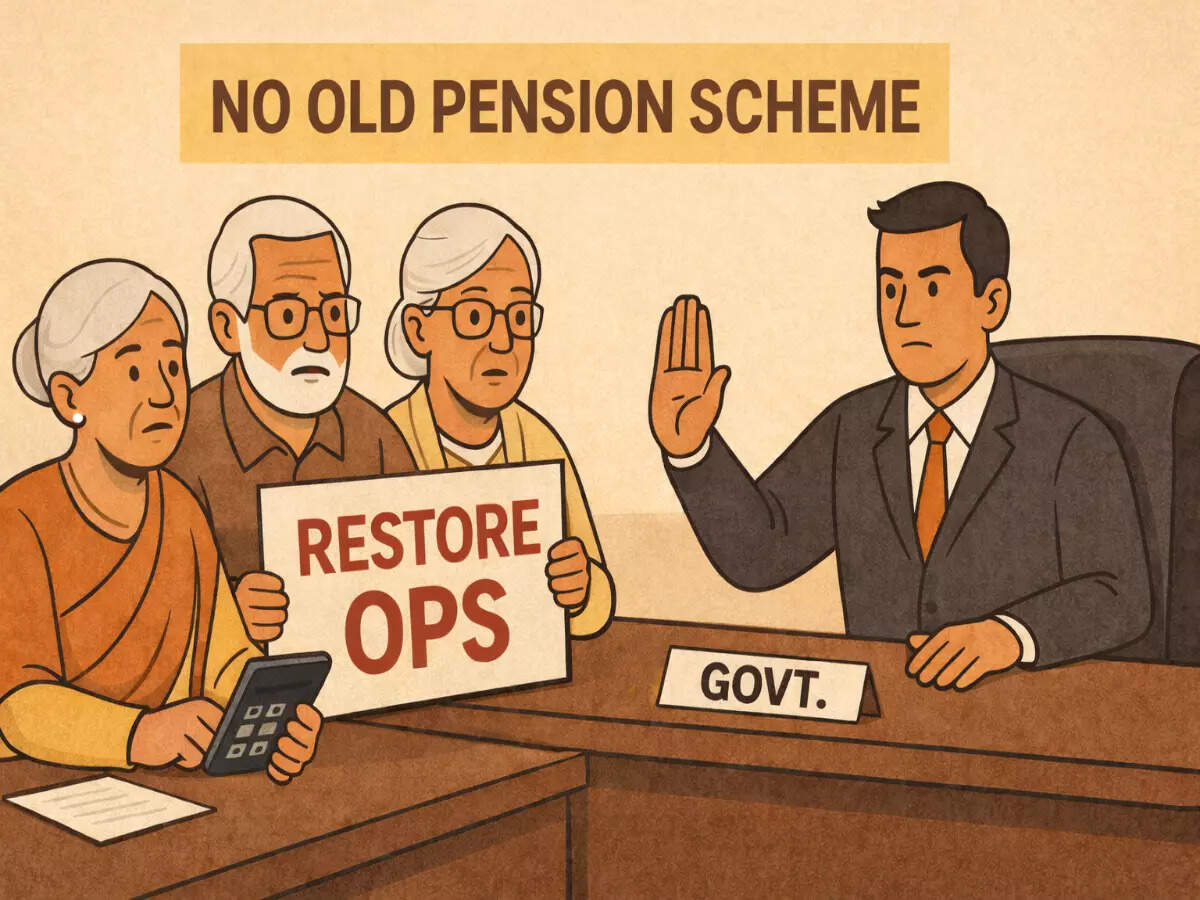
Does the government want to implement OPS by replacing NPS and UPS?
“There is no proposal under consideration of the government for the restoration of Old Pension Scheme (OPS) in respect of central government employees covered under National Pension System (NPS) or Unified Pension Scheme (UPS),” said Pankaj Chaudhary, Minister of State, Ministry of Finance, in response to an unstarred question by Members of Parliament, Anto Antony, Amra Ram, Utkarsh Verma Madhur and Imran Masood.
OPS is the oldest pension scheme in India. It’s a defined benefit scheme, where pension slabs are revised in every pay commission. The central government abolished OPS and started National Pension System, a defined contribution scheme, from January 1, 2004.
The Centre launched UPS for central government employees, which they could choose from April 1, 2025. It combines elements of OPS and NPS, offering employees a minimum guaranteed pension of Rs 10,000 on completion of 10 years’ service. The central government also provided NPS subscribers an option to switch from NPS to UPS and switch back from UPS to NPS, the deadline for which was November 30, 2025.
Whether NPS funds will be returned to states where the governments have reinstated OPS?
The MPs also asked whether many state governments have implemented OPS for their employees? They asked if these states have implemented OPS, the what will be the process to return the funds deposited with Centre to the state governments.
Chaudhary says that as per the Pension Fund Regulatory and Development Authority Act, 2013, (PFRDA) (Exits and Withdrawals under the National Pension System) Regulations, 2015, and other relevant Regulations, there is no provision, through which, the accumulated corpus of the subscribers, including government contribution, employees’ contribution towards NPS along with accruals, can be refunded and deposited back to the state government.
Giving the list of the states that have restored OPS, Chaudhary says that the state governments of Rajasthan, Chhattisgarh, Jharkhand, Punjab, and Himachal Pradesh have informed PFRDA about their decision to restart Old Pension Scheme (OPS) for their state government employees.
Does UPS have discrepancies?
In questions related to UPS, the four MPs asked if it is a fact that the contribution deducted from the salary of UPS subscribers employees during their employemnt won’t be returned to them upon retirement. The MPs also asked whether some discrepancies have been found with UPS.
Chaudhary says there is no provision for returning contributions deducted from the salary of employees during their service, once the UPS payout starts.
“However, UPS subscriber or the legally wedded spouse, as the case may be, shall have an option to withdraw an amount not exceeding 60% of the individual corpus or benchmark corpus, whichever is lower, available in the PRAN tagged to UPS on the date of superannuation or voluntary retirement or retirement under Fundamental Rules 56(j) subject to proportionate reduction in the assured payout payable to such UPS subscribers,” Chaudhary explained the rule.
Chaudhary says that some of the features of UPS are as follows-
• Assured payout at the rate of 50% of the average basic pay drawn over the last 12 months prior to superannuation for a minimum qualifying service of 25 years. This payout to be proportionate for lesser service period up to a minimum of 10 years of service.
• Assured family payout at the rate of 60% of payout admissible to the employee immediately before his/her demise to legally wedded spouse.
• Assured minimum payout of Rs 10,000 per month on superannuation after a minimum 10 years of qualifying service.
• Inflation indexation on the assured payout, on assured family payout, and assured minimum payout. Dearness Relief will be based on All India Consumer Price Index for Industrial Workers (AICPI-IW) as in case of serving employees.
• Lump sum payment at superannuation in addition of gratuity at rate of 1/10th of monthly emoluments (basic pay+DA) as on the date of superannuation for every completed six months of service. This payment will not reduce the quantum of assured payout.
1.22 lakh central government employees joined UPS, clarifies Finance Ministry
Answering another query in Parliament, Chaudhary said that only 1,22,123 employees, including new joinees, existing employees, and past retirees have opted for UPS as of November 30, 2025.
The question was asked by Janardhan Singh Singriwal, MP, Lok Sabha.